Reviving the Evangelisation of Africa:
A History of the Missionaries of Africa (White Fathers), 1868–1960
Abstract
This article reconstructs the origins, development, and missionary strategies of the Missionaries of Africa, commonly known as the White Fathers, from their foundation in 1868 to the post‑war period of 1960. Founded by Archbishop Charles Lavigerie of Algiers, the Society emerged from a distinctive vision of evangelisation rooted in cultural incarnation, geographical audacity, and holistic pastoral engagement. Drawing on internal institutional developments and external geopolitical contexts, this study traces the Society’s expansion across North Africa, the Sahara, East and Central Africa, and later into West and Southern Africa. It also examines the profound impact of martyrdom, colonial hostility, and the two world wars on the trajectory of the Society. The article concludes by assessing the Society’s transformation into a global missionary body by 1960, poised for new developments in the era of African independence.
Keywords
Charles Lavigerie; Missionaries of Africa; White Fathers; Catholic missions; North Africa; East Africa; Sahara; colonial era; evangelisation; missionary history.
Introduction
The foundation of the Missionaries of Africa in 1868 marked a decisive moment in the history of Catholic evangelisation on the African continent. Emerging from the vision of Archbishop Charles Lavigerie, the Society proposed a radically distinct approach to mission at a time when most European missionary congregations remained confined to Africa’s coastal regions. Lavigerie’s training as a historian and his acute awareness of earlier missionary challenges shaped the new institute’s purpose: to renew the Christian presence in Africa through cultural, pastoral, and geographical innovation. This article examines the origins, expansion, and institutional evolution of the Missionaries of Africa from their foundation until 1960, highlighting their strategies of inculturation, their geographic ambitions, and the historical forces that shaped their identity.
Lavigerie’s Vision and the Foundations of the Society (1868–1874)
Lavigerie’s project rested on five core principles that distinguished the Missionaries of Africa from other contemporary religious institutes. First, he insisted that missionaries cultivate genuine relations with African communities, including Muslims, whose influence had already shaped large regions of North, West and East Africa. Second, he required deep cultural adaptation, symbolised by the adoption of local dress, food, language, and daily life patterns. Third, he proposed an inversion of traditional missionary geography: rather than beginning from coastal enclaves, evangelisation should radiate outward from Africa’s interior. Fourth, mission had to be holistic, integrating proclamation of the Gospel with educational and charitable work. Finally, the success of the mission demanded exceptional apostolic zeal.
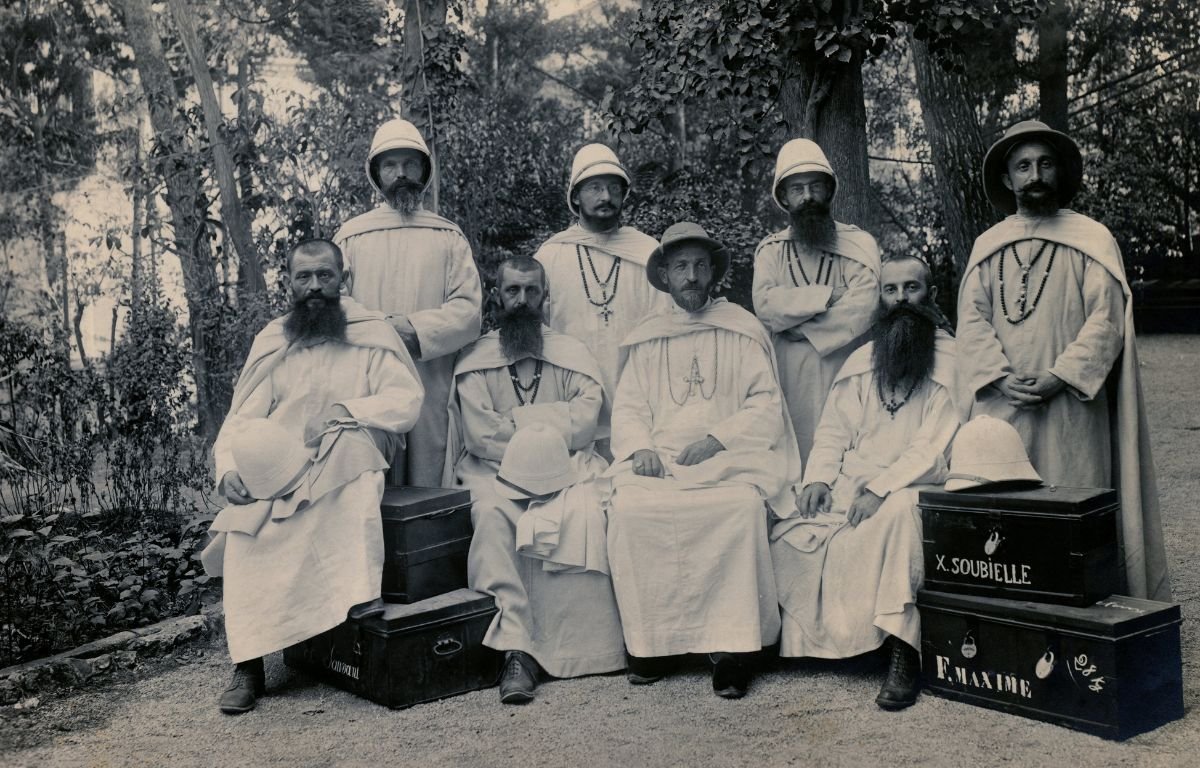
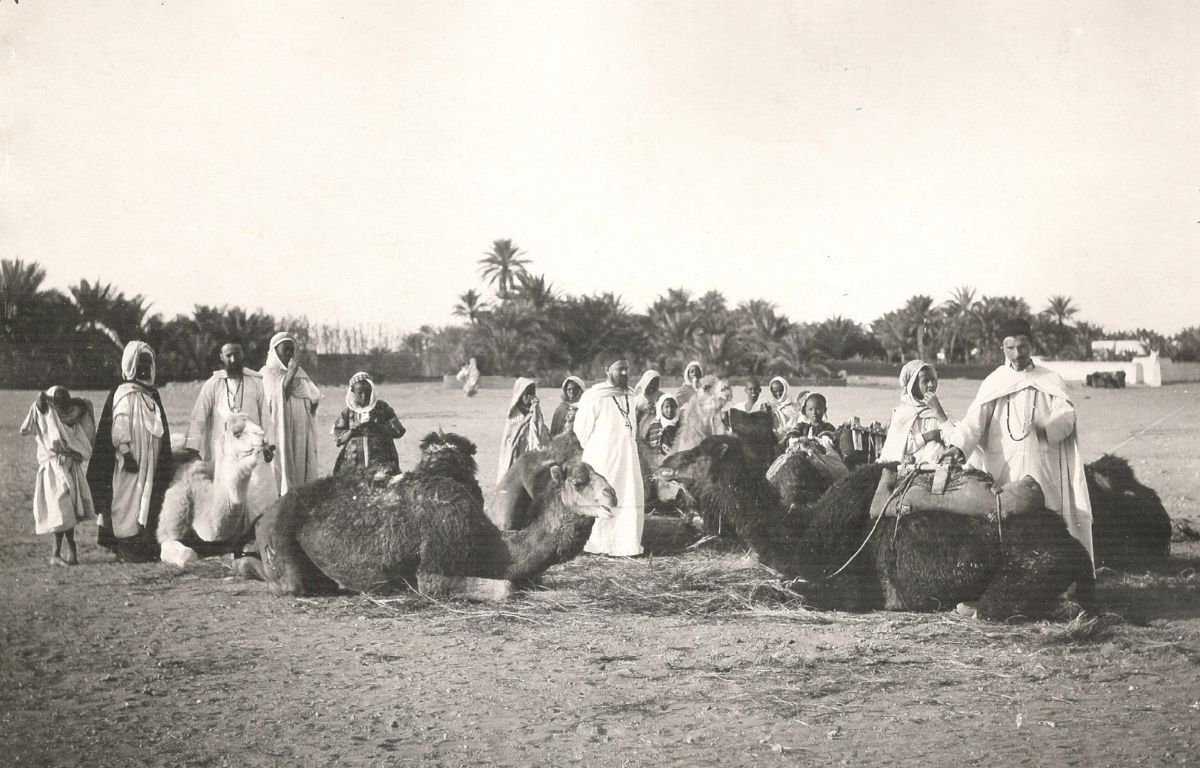
The first recruits, a small group of seminarians in Algiers, embraced this vision in 1868. That same year, Lavigerie secured from Rome the establishment of the Apostolic Delegation for the Sahara and the Sudan, marking the Society’s official jurisdiction. In 1869 the candidates received their Rule and an adapted habit identical to the traditional North African costume but marked by a rosary worn visibly around the neck. The early years established the intercultural and evangelical identity that would define the Society.
Early Missions in Algeria and the Sahara (1869–1878)
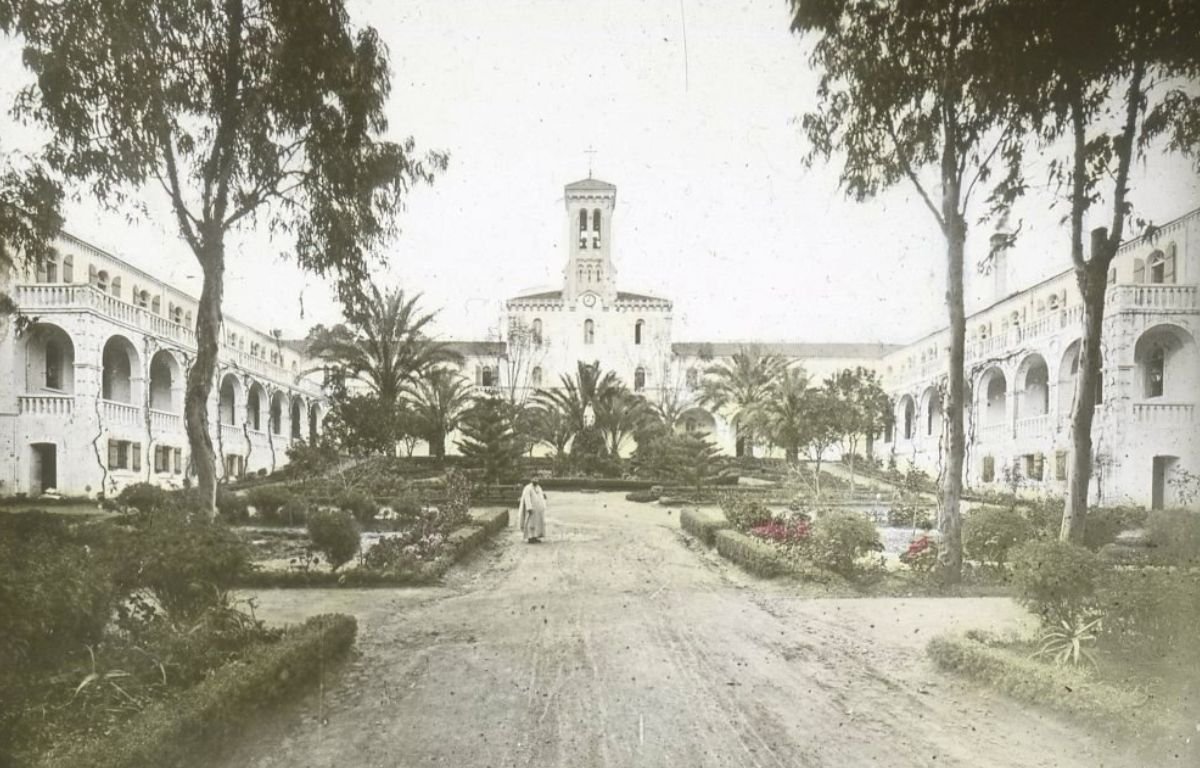
The nascent Society’s first major work was humanitarian: caring for thousands of Algerian orphans displaced by famine between 1869 and 1871. By 1872, the missionaries were extending their presence into Kabylia, founding Christian villages and small mission stations. In 1873, they assumed responsibility for the Sanctuary of Our Lady of Africa in Algiers, a symbolic centre of Catholic presence in the region.
Simultaneously, the missionaries entered the Sahara, establishing stations in Laghouat, Biskra, Gerryville, and Metlili. The first General Chapter of 1874 formalised the Society’s governance structure, reinforcing its missionary purpose. From 1874 onward, the Society expanded into Europe to establish houses for formation and fundraising, laying the institutional foundations for long‑term sustainability.
New Horizons: Tunisia, the Sahara, and Central Africa (1875–1886)
Between 1875 and 1878 the Missionaries of Africa expanded their activity northward and southward. The mission in Carthage (1875) became a major centre of work in Tunisia, including the creation of schools for redeemed slaves. The same period saw deepened penetration of the Sahara, including attempts, sometimes fatal, to reach Timbuktu, a city imagined as a gateway to the “land of the Blacks.”
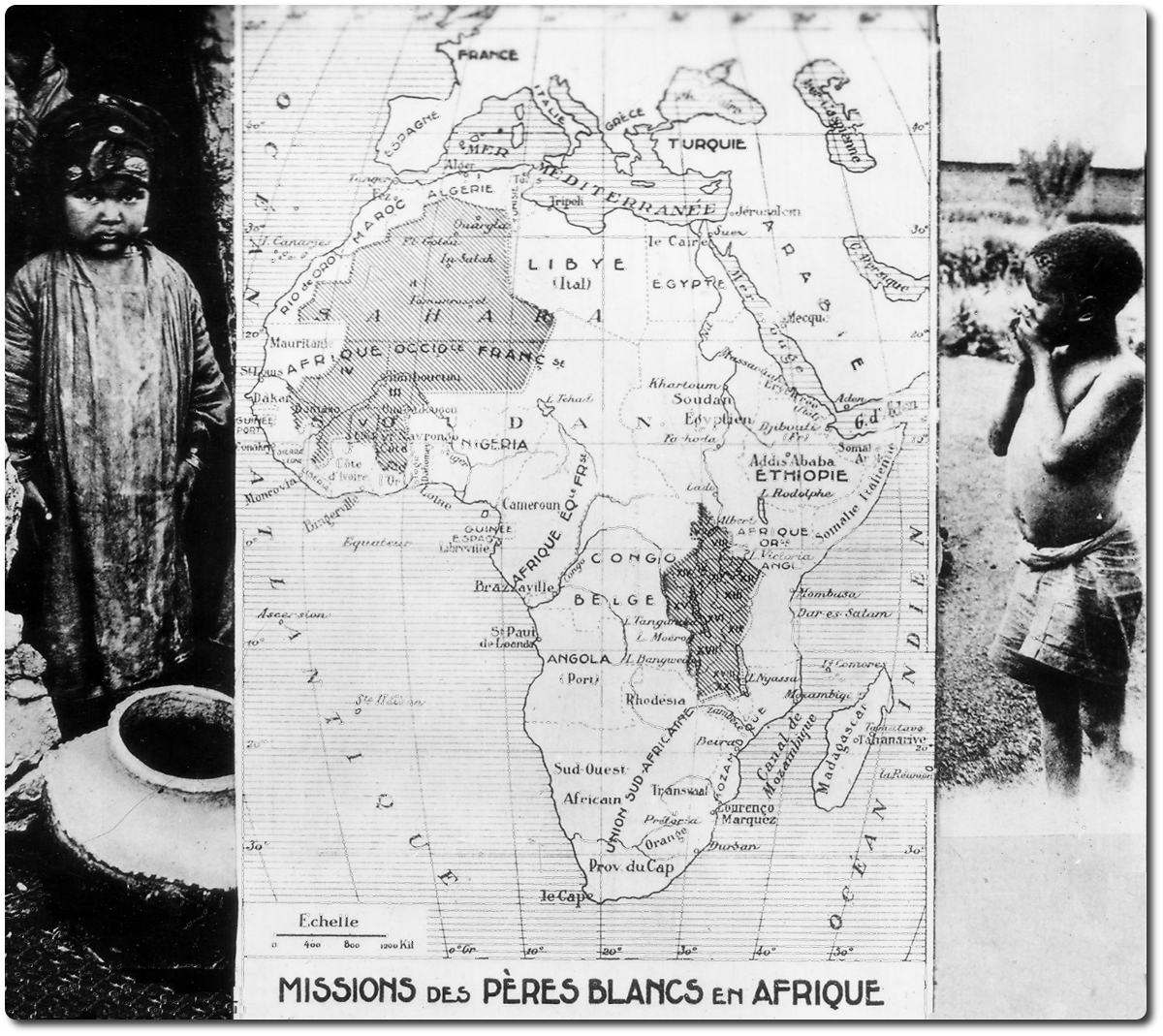
A watershed moment occurred in 1878 when the Holy See entrusted the Society with the evangelisation of Equatorial Africa. Missionaries landed in Zanzibar in May of that year and advanced rapidly toward Uganda and Tanganyika. By October 1878 the Society also established itself in Jerusalem, launching a complementary mission in the Holy Land.
Continental Expansion and Institutional Consolidation (1879–1906)
The missionaries reached Uganda in 1879, Burundi in the same year, and Congo in 1880. Although another expedition to Timbuktu in 1881 ended in martyrdom, the Society continued to expand. New missions were founded in Malta and Zanzibar. In 1883, Léon Livinhac became the first Missionary of Africa to be ordained bishop; he would later lead the Society.
Under Livinhac’s leadership, the congregation expanded dramatically in West Africa. Missions were founded in Ségou (1895), Timbuktu (1895), and Guinea (1896). The Society also established itself in Upper Volta, now Burkina Faso, in 1900. Meanwhile, in Central and Southern Africa, new missions appeared in Zambia (1895) and Rwanda (1900). Houses in Buenos Aires (1898), Quebec (1901), Mombasa (1903) expanded the Society’s global footprint.
Conflict, Challenge, and Renewal (1906–1939)
The First World War severely affected the Missionaries of Africa. International communities were strained by national divisions, recruitment declined, and many missionaries were drafted. Despite these challenges, the post-war period witnessed renewed growth. Vocations increased, new vicariates were entrusted to the Society, and the 22 Uganda Martyrs were beatified in 1920, an event that reshaped the Society’s missionary identity.
From 1922 until the outbreak of the Second World War, the Society expanded across Africa and North America. However, anti‑clerical colonial administrations, especially in French West Africa, often hindered missionary initiatives.
War and Post‑War Transformation (1939–1960)
The Second World War again disrupted missionary work, but the decade following the war became one of the most dynamic periods in the Society’s history. Between 1947 and 1957, membership increased from 2.380 to 3.167. The Society adopted an official bilingual (French‑English) structure in 1947, reflecting its increasingly international membership. In 1952, the Generalate was moved from Algiers to Rome, bringing the Society closer to the Holy See. In 1957, for the first time, a non‑French Superior General, Léo Volker, was elected, marking the transition to a more internationally representative congregation. New Constitutions published in 1959 formalised these developments and positioned the Society for a new phase of global mission.
Conclusion
Between 1868 and 1960, the Missionaries of Africa evolved from a small group of seminarians into one of the most influential Catholic missionary societies on the continent. Guided by Lavigerie’s emphasis on inculturation, geographical boldness, and pastoral integration, they expanded across North, West, Central, East, and Southern Africa, Europe, Middle East, Americas, forming deep relationships with diverse African peoples. Despite periods of intense hardship, including famine, martyrdom, colonial opposition, and two world wars, the Society solidified its identity as a missionary body dedicated to the spiritual and human advancement of African communities. By 1960, on the eve of African independence movements, the Missionaries of Africa had become a global institution, ready to enter a new chapter in its history.